
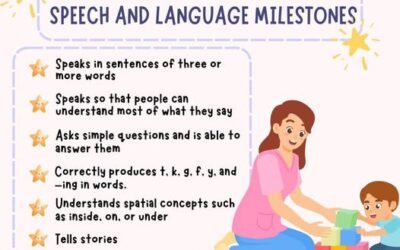
At Strengths in Motion – Speech & Occupational Therapy we love helping children build the skills they need to communicate, understand, and thrive in their everyday environments. Today in speech therapy, our focus was on something that might sound simple—but can be surprisingly tricky for many children: spatial concepts.
You might not think twice about giving your child a direction like, “Put the toy under the table,” or “Stand between your friends.” However, statements like these are full of embedded concepts that require a child to process more than just one piece of information at a time.
The Hidden Complexity in Everyday Directions
When we talk to kids, our directions often include:
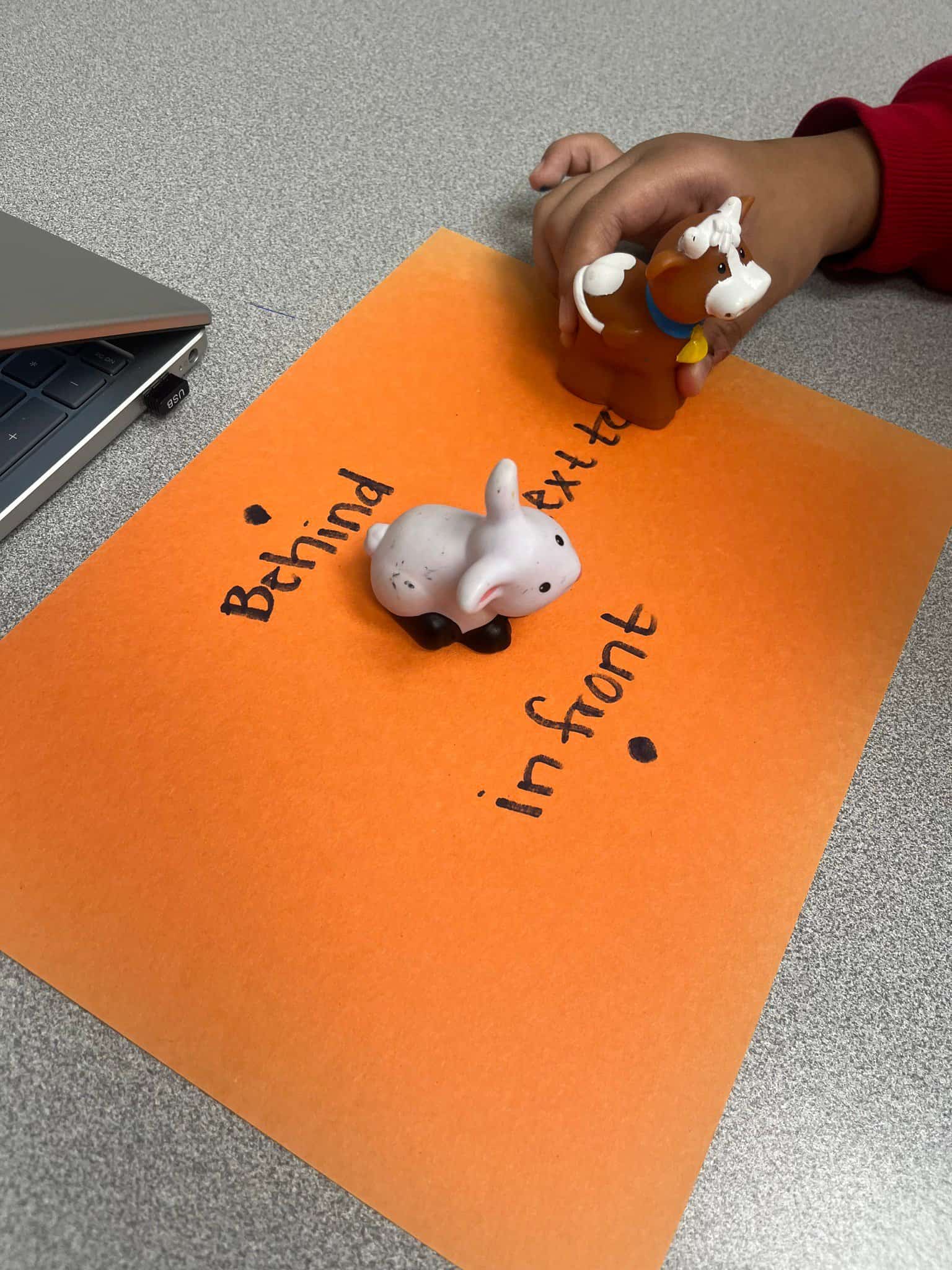
- Spatial words: under, between, next to, in front of, behind.
- Size words: big, small, tiny, huge.
- Quantity words: all, some, one.
- Temporal words: first, last, before, after.
Each type of word brings its own challenge. Put them together in a single sentence, and it can be a lot for a child—especially one who may have difficulty with comprehension, attention, or memory—to process! For example, “Before you get your coat, put the small block in the bin next to the chair” requires the child to understand when to act (temporal concept), which object to use (size concept), and where to put it (spatial concept)—all before completing the action.
Why We Use Visual Strategies in Therapy
To make these concepts easier to understand, we often pair verbal directions with visual supports. This might include:
- Pictures showing the position of objects.
- Simple illustrations that represent “first,” “next,” and “last.”
- Written keywords or color-coded prompts.
Visual strategies help children see what is being asked, which reduces the cognitive load of listening and remembering multiple parts of the instruction at once. This approach can be especially helpful for children with speech and language delays, processing difficulties, or those who are visual learners by nature.
How This Helps Outside the Therapy Room
The skills we work on in therapy sessions—like understanding “under,” “between,” or “after”—transfer to real-life situations. Comprehending spatial, size, quantity, and temporal words helps children follow directions in the classroom, participate more fully in play with peers, and navigate the instructions they hear at home.
If you’re a parent or caregiver, try using both words and visuals when giving directions to your child. Breaking instructions into smaller steps and checking for understanding can also make a big difference.
At Strengths in Motion, we tailor our speech therapy sessions to meet each child’s unique learning needs, making learning both fun and functional. By combining engaging activities with strategies like visual supports, we help children build a strong foundation for listening, understanding, and communicating with confidence.
💡 Tip for Home: Next time you give your child a multi-step direction, pause to think—“What concepts are built into these words?” Adding a picture, a gesture, or pointing to an example can make those concepts click!
0 Comments