
Every child has a unique voice—and it doesn’t always sound the same. Communication is so much more than spoken words. It can be a glance, a gesture, a picture, or a button tapped on a device. At Strengths in Motion—Speech & Occupational Therapy in Medina, MN—we celebrate all the ways kids express themselves. Our therapists meet each child where they are and help them grow the skills and confidence to communicate in the ways that work best for them.
This approach is called multimodal communication. It simply means using more than one method to share wants, needs, thoughts, and feelings. Some children use a single approach most of the time; others switch strategies depending on the situation. All of it is valid, meaningful, and worthy of being heard. In fact, supporting multiple modes of communication often reduces frustration, builds language, and empowers children to participate more fully at home, school, and in the community.
Here are just a few of the ways children communicate—often in combination:
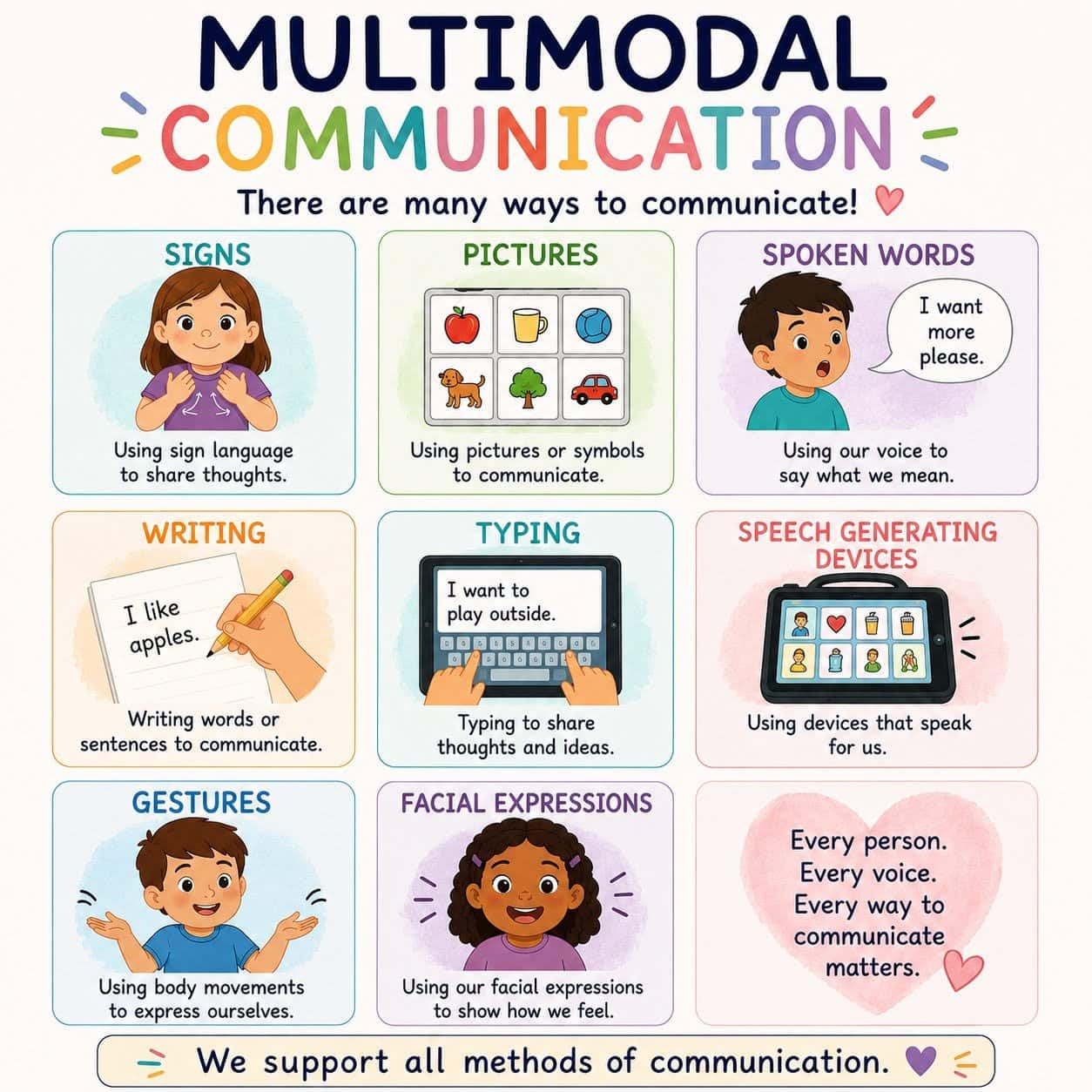
- Sign language, including key word signs and ASL
- Pictures and visual supports like choice boards, photo schedules, and symbol cards
- Spoken language, from single words to longer phrases and sentences
- Speech-generating devices (AAC), including dedicated devices or tablet-based apps
- Typing and writing, whether on a keyboard, tablet, or whiteboard
- Gestures and body language such as pointing, reaching, or waving
- Facial expressions that convey feelings and intentions
Why does this matter? Because there is no one-size-fits-all path to communication. Some children are developing speech and benefit from visuals while they build vocabulary and sentence structure. Others may rely on AAC as a primary voice, with speech, signs, and gestures playing supportive roles. Many kids use different strategies in different settings—speaking more at home, using pictures at school, and tapping a device in noisy environments. When adults honor and model multiple modes, children learn that their ideas matter and that they can be understood in real time.
At Strengths in Motion, our team provides:
- Individualized assessment to understand each child’s strengths, preferences, sensory needs, and goals.
- Collaborative care across speech-language pathology and occupational therapy, integrating motor, sensory, and communication supports.
- AAC expertise, from trialing devices and apps to customizing page sets, training families, and coordinating with schools.
- Play-based therapy that keeps sessions engaging and meaningful, creating natural opportunities to communicate.
- Caregiver coaching so parents and partners feel confident responding to and expanding all forms of communication at home and in the community.
- Practical visual supports and routines that make daily activities (meals, transitions, outings) easier and more successful.
Small changes can make a big difference. Here are simple ways to encourage multimodal communication at home:
- Treat every attempt—spoken or not—as communication. Respond warmly to gestures, eye gaze, signs, and device selections.
- Model, don’t quiz. Show your child how to use pictures, signs, or a device while you talk, rather than asking them to perform on demand.
- Offer choices with visuals. Present two items and label them verbally while showing photos or symbols to support understanding and expression.
- Build in wait time. Pause after asking a question or making a comment to give your child time to process and respond in their preferred way.
- Keep tools accessible. Place picture cards, a device, or a notepad within reach so communication is always available, not just during “therapy time.”
- Celebrate approximations. If your child gestures toward the fridge, acknowledge it—“You want a snack!”—and model a sign, word, or button press to expand their message.
Above all, remember: speech is not the only sign of progress. When a child uses their eyes to point to a picture, taps a button to say “more,” signs “help,” or types a word—that’s communication. Those moments are milestones, building blocks that lead to richer language, stronger relationships, and more independence.
If you’re in the Medina, MN area and want support for your child’s communication journey, we’re here to help. Strengths in Motion offers pediatric speech, occupational, and feeding therapy designed around your child’s strengths and your family’s goals. Learn more or request an appointment at www.strengthsinmotion.com. Every voice deserves to be heard—and we’re honored to help your child find and use theirs.
0 Comments