


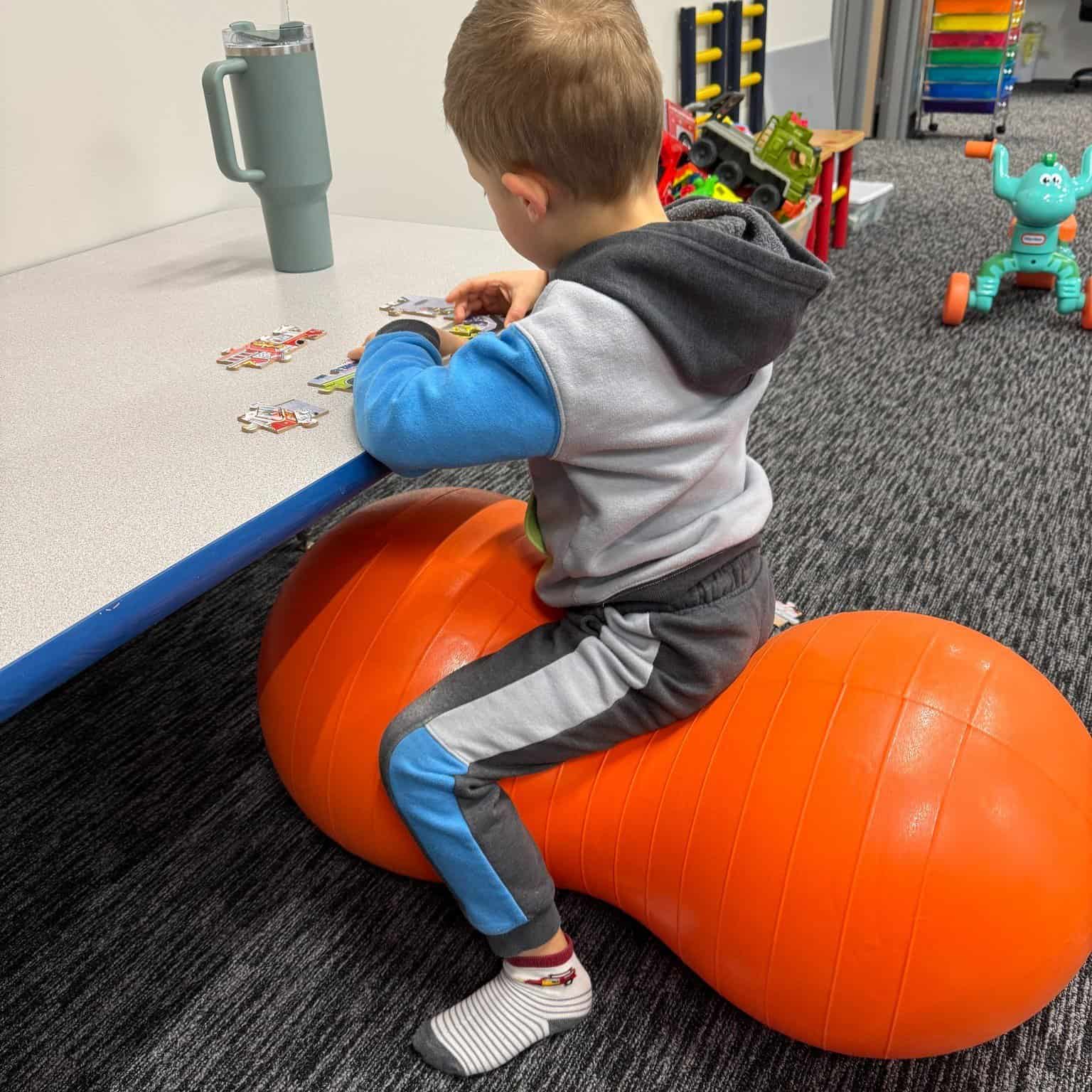
At Strengths in Motion – Speech & Occupational Therapy, we love combining fun and therapy. One of our most popular tools? The peanut ball! This colorful, peanut-shaped therapy ball has quickly become a favorite among the kids who visit us. But there’s more to it than just laughs and giggles. The peanut ball is a superhero when it comes to helping kids grow and develop important sensory and movement skills. Let’s explore why it’s such a big hit with both kids and parents!
What Makes the Peanut Ball Special?
The peanut ball is shaped like—you guessed it—a peanut! Its design allows for easier stability compared to a traditional round exercise ball, making it safer and more versatile for kids to use. Aside from its unique shape, the peanut ball serves a dual purpose: it’s all about having fun while giving kids essential sensory experiences that their bodies need to grow stronger and more coordinated.
When kids play with the peanut ball, they’re getting two main sensory inputs—proprioceptive and vestibular. But what does that mean?
Sensory Superpowers: Proprioceptive and Vestibular Input
Proprioception is like your body’s GPS system. It tells your brain where your body parts are and how they’re moving. For example, when you reach out to grab something without looking, that’s your proprioception at work! Activities on the peanut ball, like bouncing or leaning side to side, help kids strengthen this sense. Stronger proprioception means kids can better control their movements, improving coordination and body awareness.
The vestibular system, on the other hand, is all about balance and movement. Located in the inner ear, it helps you stay steady when you’re walking, running, or even doing cartwheels! Things like balancing on the peanut ball or gently rocking back and forth stimulate this system, teaching the brain how to manage motion and maintain stability.
Fun Activities with the Peanut Ball
At Strengths in Motion, we create fun, engaging activities that encourage kids to use the peanut ball in different ways. They bounce on the ball, roll forward on it like a wheelbarrow, or even lie across it while catching a ball or reaching for toys on the floor. These activities challenge kids to focus and coordinate their movements, all while having a blast!
Every bounce, lean, or wiggle strengthens their muscles, improves core stability, and sharpens their motor skills. Best of all, kids often don’t even realize they’re “working” because they’re so busy having fun!
Why Sensory Play Matters
Play that involves sensory input is incredibly important for a child’s development. It helps them feel more confident in their bodies, improve their coordination, and gain the movement skills they need to succeed in everyday activities like writing, running, or even sitting still in school.
A Fun Choice for Home
If your child loves moving and bouncing, why not explore similar sensory tools for your own home? A peanut ball can be a fantastic addition to their playtime, combining entertainment and the benefits of sensory development.
Interested in learning more about sensory tools and therapy? Reach out to us at Strengths in Motion or follow along for more tips and ideas. Let’s keep growing, moving, and having fun—one bounce at a time!
0 Comments